
12 March
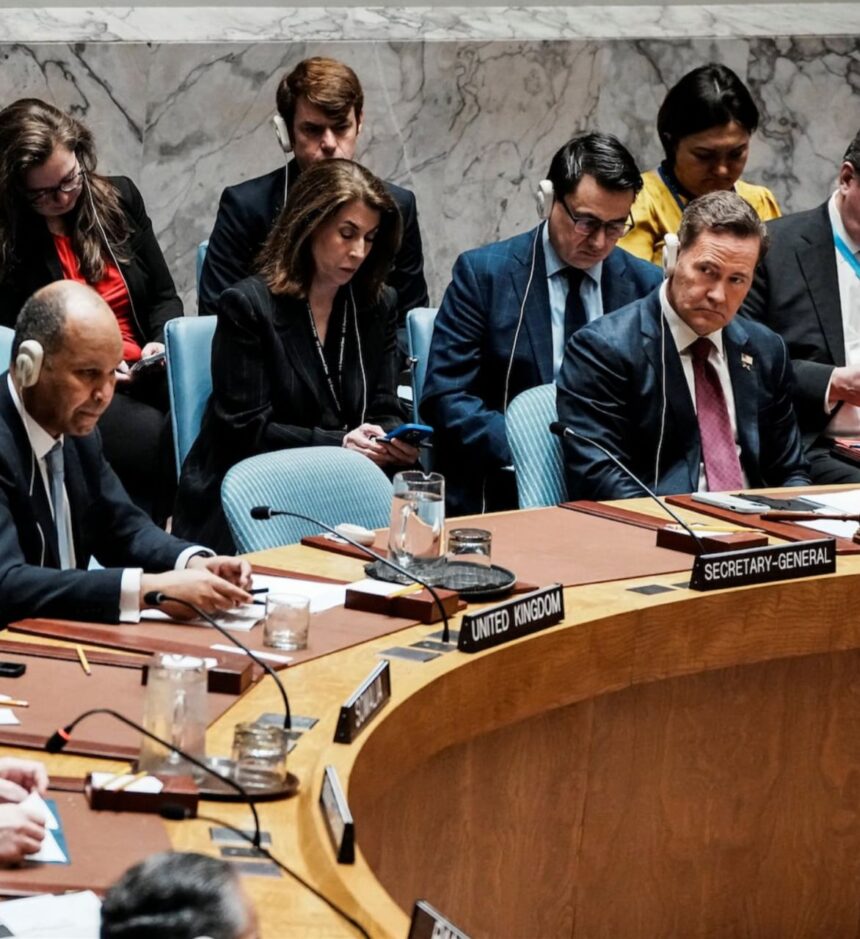
Diplomatic tensions flared at the United Nations Security Council as the United States and its Western allies clashed with Russia and China over the nuclear programme of Iran.
The dispute arose during a council meeting where Washington pushed for renewed scrutiny of Iran’s nuclear activities, seeking further justification for the ongoing war it launched against Tehran two weeks ago.
Russia’s U.N. ambassador, Vasily Nebenzya, accused the United States and its allies of fueling what he described as “hysteria” over alleged Iranian plans to develop nuclear weapons. He argued that such claims had not been confirmed in reports by the International Atomic Energy Agency.
During the meeting, Russia and China attempted to block discussions related to the sanctions-monitoring body known as the United Nations Security Council 1737 Committee, which oversees the enforcement of sanctions on Iran. However, the motion failed after 11 members of the 15-member council voted to proceed, with two votes against and two abstentions.
Addressing the council, the U.S. envoy to the United Nations, Mike Waltz, accused Moscow and Beijing of shielding Tehran by attempting to obstruct the committee’s work.
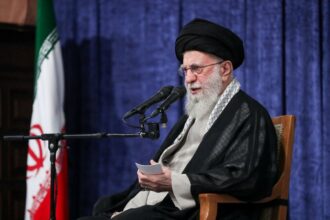
Iran’s ambassador to the United Nations, Amir Saeid Iravani, rejected the accusations, insisting that Iran’s nuclear programme “has always been exclusively peaceful.” He also warned that Tehran would not recognise any attempt to enforce additional sanctions against the country.
The United States further called on all U.N. member states to enforce an arms embargo on Iran, restrict the transfer of missile technology, and freeze financial assets linked to the programme.
Washington also cited recent findings by the International Atomic Energy Agency indicating that Iran had enriched uranium up to 60 percent purity — the highest level recorded for a country without nuclear weapons — and had limited international inspectors’ access to parts of its stockpile.
China’s representative to the U.N., Fu Cong, criticised Washington’s approach, describing the United States as the “instigator” of the current nuclear crisis. He argued that U.S. military actions against Iran during ongoing negotiations had undermined diplomatic efforts.
Meanwhile, France and United Kingdom backed Washington’s position, telling the Security Council that re-imposing sanctions on Iran was justified due to Tehran’s failure to address international concerns over its nuclear programme.
French officials also warned that the size of Iran’s enriched uranium stockpile could theoretically be sufficient to produce up to ten nuclear weapons, raising fresh alarm among Western powers.
The heated exchanges highlight deep divisions among major world powers over how to address Iran’s nuclear ambitions and the growing instability in the Middle East.