

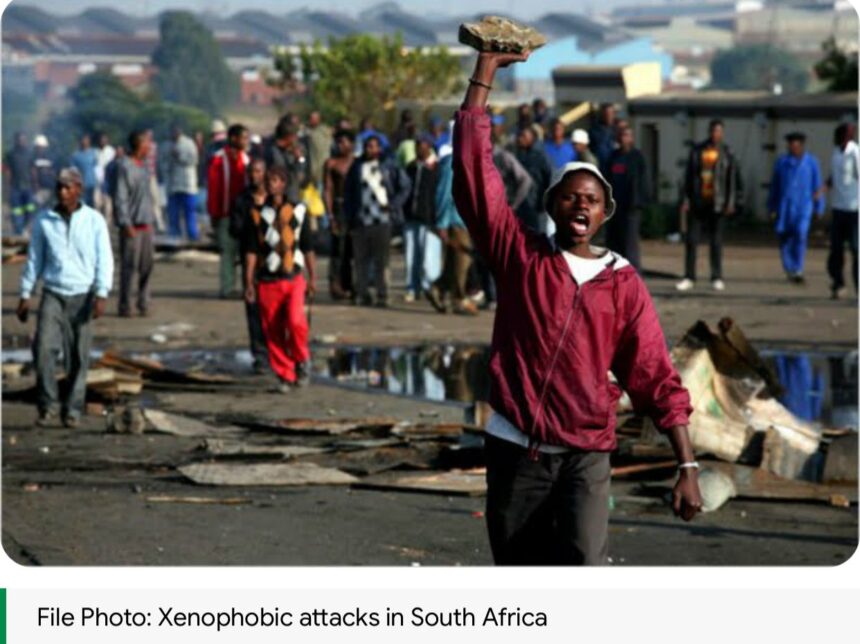
The Nigerians in Diaspora Commission has advised Nigerians living in South Africa to temporarily shut down their businesses and avoid confrontations following a fresh wave of xenophobic violence in parts of the country.
In a statement issued on Friday, the commission said the advisory became necessary due to escalating anti-foreigner protests that have targeted foreign-owned businesses and called for the expulsion of non-nationals.
According to NiDCOM, protests in cities including East London, Cape Town, Durban, and other areas in KwaZulu-Natal have turned violent, resulting in looting, destruction of property, and reported injuries.
Tensions further escalated after a viral video surfaced showing a Nigerian trader being harassed by a group of South African men who demanded he pack up his goods and leave the country. The incident has heightened fear among Nigerians and other foreign nationals, including Ghanaians, many of whom rely on small-scale businesses for their livelihood.
The commission also disclosed that intelligence from the Nigerian consulate suggests additional protests are expected in Gauteng Province between April 27 and 29. The demonstrations are reportedly aimed at pressuring the South African government over the presence of foreign nationals.
NiDCOM advised Nigerians to avoid engaging with protest groups, stay away from crowded areas, and closely monitor local media for updates.
It further urged business owners to shut their shops on April 27, which marks Freedom Day, and consider remaining closed on April 28 and 29, noting that foreign-owned businesses are often targeted during periods of unrest.
The commission said it is working in collaboration with the Nigerian Consulate-General in Johannesburg, led by Ninikanwa O. Okey-Uche, to ensure the safety of Nigerians.
It added that Bianca Onoh is engaging with South African authorities to address the situation.
NiDCOM reassured Nigerians that the mission remains operational and urged them to prioritise their safety as the situation continues to be closely monitored.