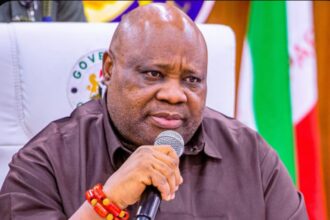

Former Kogi West Senator, Dino Melaye, has criticised the Nigerian government over the persistent challenges in the country’s electricity sector, attributing the crisis to poor governance rather than technical limitations.

In a statement shared via X, Melaye expressed concern that despite over a century of electricity generation, Nigeria continues to struggle with low power output.
According to him, the national grid recently dropped to about 3,940 megawatts, a figure he described as grossly inadequate for a population of over 200 million people.
Melaye compared Nigeria’s power generation capacity with other African countries, noting that South Africa produces over 48,000 megawatts for about 60 million people, while Egypt generates around 11,000 megawatts for a population exceeding 100 million.
He stated that although Nigeria has an installed capacity of about 13,000 megawatts, only between 4,000 and 5,000 megawatts are effectively transmitted through the grid, leaving a significant portion unused.
The former lawmaker also highlighted frequent grid failures, revealing that the national grid collapsed 12 times in 2024 alone. He further noted that 128 transmission towers were vandalised within the same period, costing the government about ₦8.8 billion in repairs.
Citing data from the Nigerian Electricity Regulatory Commission, Melaye said there were at least 222 instances of partial or total grid failures between 2010 and 2022, averaging one every three weeks over a 12-year period.
He added that restarting key power plants such as Azura, Delta, and Shiroro after each collapse costs the country approximately $25 million, equivalent to about ₦42.5 billion.
Melaye also raised concerns over the growing debt in the power sector, stating that as of February 2026, the government owes power generation companies about ₦6.8 trillion, with the figure increasing by roughly ₦200 billion monthly.
He further linked the electricity challenges to economic decline, revealing that in 2023 alone, 767 manufacturing companies shut down, while 335 others became distressed, resulting in the loss of about 18,000 jobs. In the first half of 2025, he said manufacturers spent ₦676.6 billion on alternative power sources, yet still faced significant energy shortages, leading to an additional 18,935 job losses.
Melaye’s remarks add to growing concerns over Nigeria’s power sector, as stakeholders continue to call for urgent reforms to address the country’s longstanding electricity challenges.